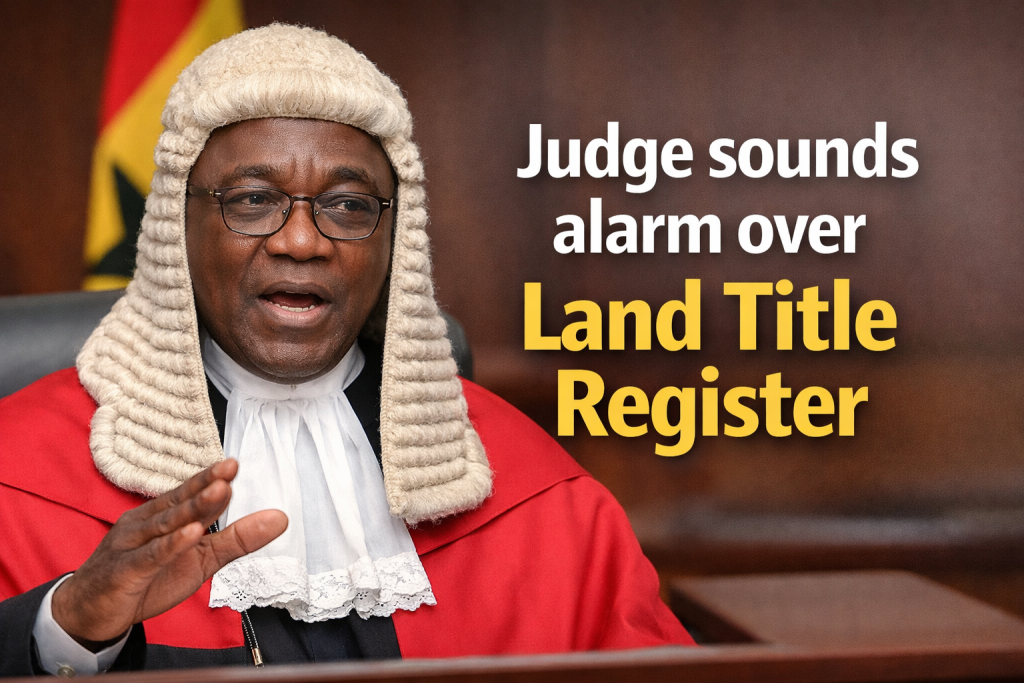
A Justice of the Court of Appeal has disclosed that more than 98% of land in Ghana remains outside the country's official title registration system, leaving millions of landowners exposed to disputes, fraud, and legal uncertainty.
According to Justice Alexander Osei-Tutu, only a very small portion of land across the country qualifies for land title registration, a system that provides stronger legal protection and state-backed ownership guarantees.
Limited Coverage of Title Registration
The judge explained that land title registration is currently restricted to designated registration districts, which cover less than 2% of Ghana's total land area. These districts are mainly located in Greater Accra, parts of Kumasi, and sections of Kasoa.
Outside these areas, land transactions fall under the deeds registration system, which does not guarantee ownership but merely records documents related to land dealings.
Risks Associated with Deeds Registration
Justice Osei-Tutu noted that the deeds registration system allows the same parcel of land to be registered multiple times, creating room for overlapping claims, protracted court cases, and frequent land disputes.
He stressed that unlike title registration — which produces an indefeasible and state-guaranteed title — deeds registration only serves as evidence that documents were submitted, not proof of rightful ownership.
Call for Urgent Reforms
Justice Osei-Tutu called on government and land sector agencies to expand registration districts nationwide, strengthen land governance structures, and improve public education on proper land acquisition processes.
He noted that improving land registration coverage is essential for promoting economic growth, protecting property rights, and reducing the growing number of land-related court cases.