When the Rev. Martin Luther King Jr. stepped to the podium at the Lincoln Memorial on a stifling hot August day in 1963, he faced a cast of characters who also knew how to command a stage.
At the White House, President John F. Kennedy watched King deliver his “I Have a Dream” speech on live television while declaring, “He’s damned good!” Sitting onstage to King’s left, Mahalia Jackson inspired the speech’s improvised closing by shouting, “Tell them about the dream, Martin!” And such celebrities as Marlon Brando, Charlton Heston and Lena Horne and joined 250,000 people in the audience as King barreled to the climax of his most famous speech.
Most now know what happened next. King’s address at the March on Washington is now seen by many as the greatest political speech in American history. Even Kennedy, who had initially opposed the march, was beaming when he greeted the civil rights leader at a White House reception afterward, telling King with a smile, “And you had a dream.”
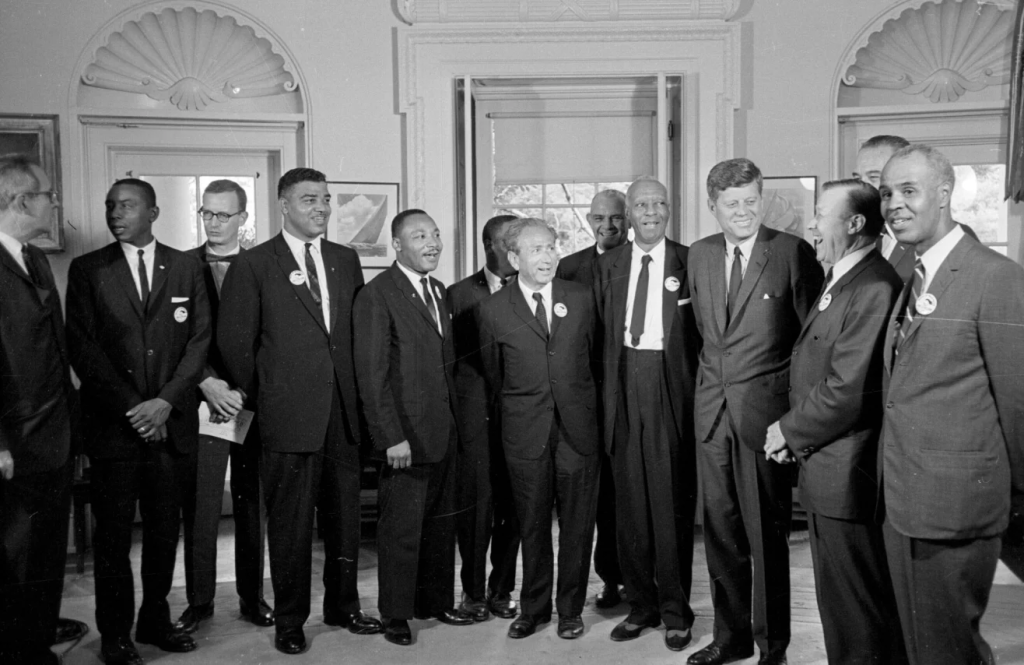
President John F. Kennedy meets with King, center left, and a group of other leaders of the March on Washington at the White House after King's speech on August 28, 1963. AP
But King wasn’t the first one to have that dream. He wasn’t the first to enthrall America with a vision of a new, harmonious social order where race, class or creed didn’t divide people. And he wasn’t the first American to have his dream go viral.
That honor belonged to a White, bespectacled Wall Street banker named James Truslow Adams, whose name rarely surfaces when King’s greatest speech is cited. Adams is the forgotten hero of King’s greatest speech. He’s "the founding founder" of the dream metaphor that became the central image of the civil rights movement.
Three decades before King’s speech, Adams coined and popularized the idea of the American dream in his bestselling book, "The Epic of America,” written to rally Americans during the depths of the Great Depression.
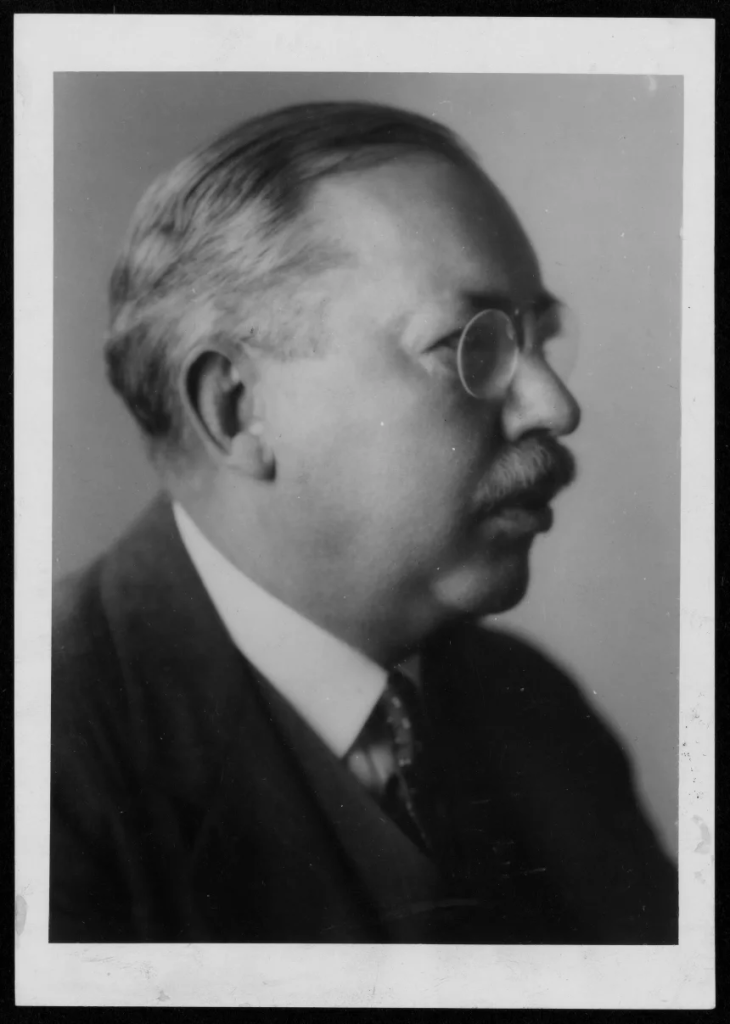
A 1938 photograph of James Truslow Adams. Boston Herald-Traveler Photo Morgue/Boston Public Library
“There were scattered references to an American dream around 1870, but it was Adams who put the phrase on the map, Jim Cullen, author of "The American Dream: A short history of an idea that Shaped a Nation," tells CNN. “Adams uses that phrase over and over again. By the 1950s, it had become what we now call a meme.”
As America observes King’s national holiday on Monday it can be difficult to separate myth from facts 63 years after his most popular speech. His iconic address has been endlessly replayed, dissected and misinterpreted.
As America observes King’s national holiday on Monday it can be difficult to separate myth from facts 63 years after his most popular speech. His iconic address has been endlessly replayed, dissected and misinterpreted.
Yet what’s seldom mentioned is that King’s use of his signature “dream” phrase at the climax of the speech was not just the result of his improvisational brilliance. He had help along the way — a fact that should deepen one’s appreciation of King’s genius, historians say.
“King was able to stich that idea (from Adams) into the mission of the civil rights movement,” Cullen says.
So who was Adams? Why has he been forgotten? And how was his American dream different than King’s?
What the dream meant before King
Adams was in some ways the anti-King.
King was a democratic socialist who was suspicious of unfettered capitalism. He called for universal health care and education, a guaranteed annual income and the nationalization of some industries. He believed the federal government should do more for disadvantaged people.
Adams, though, was a beneficiary of the fruits of capitalism. He believed in a small government. He was born into a well-off Brooklyn, New York, family and became a successful Wall Street investment banker. He made enough money from his investments to retire and purse his true passion: writing history books. He won a Pulitzer Prize for history in 1922 for his book, “The Founding of New England.”
But when he wrote “The Epic of America,” his faith in America had been shaken. The gap between the have and have-nots had widened into a canyon. Americans were losing faith in democracy. Authoritarian governments were on the rise in Europe. And, according to historian Sarah Churchwell, “…many Americans were worried that similar ‘despotic’ energies would support the fabled 'man on horseback' who might become an American tyrant.”
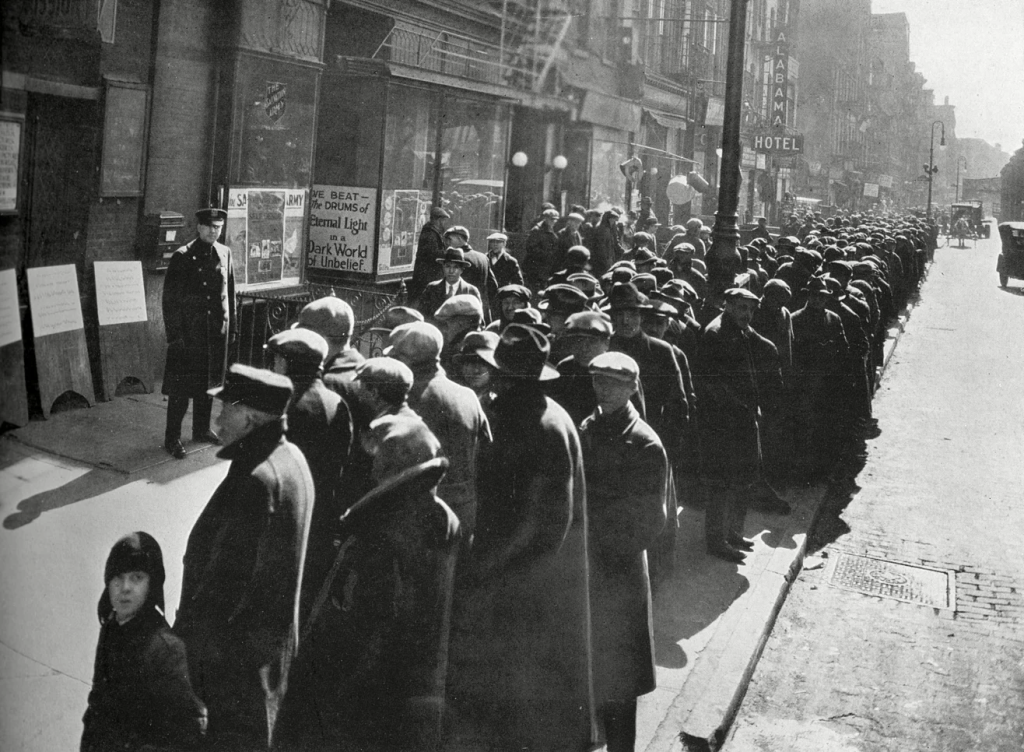
A year before the stock market crash of 1929 plunged the country into the Great Depression, men line up for bread at the Bowery Mission in New York City on March 31, 1928.Historia/Shutterstock
Like King, Adams created the image of a dream to describe the America he yearned for. Adams wanted to call his book “The American Dream.” The publisher rejected it, Cullen said. He said, “No one will pay three dollars for a book about a dream.”
Adams knew, however, that his metaphor had power. He invoked the phrase at least 30 times in his book. He wrote that his vision of America was “not a dream of motor cars and high wages merely, but a dream of a social order in which each man and each woman shall be able to attain to the fullest stature of which they are innately capable, and be recognized by others for what they are, regardless of the fortuitous circumstances of birth or position.”
That doesn’t quite resonate like King’s speech, but Adams’ book found an audience and became a best-seller. Cullen, the historian, says Americans were desperate for a vision of a better future, and Adams’ book gave them a name and a succinct definition for it.
Cullen says Adams’ book came out during the early-1930s “rock bottom” of the Great Depression. “There were fears that American society is going to dissolve amid hunger and poverty that threatens to engulf a large swath of population,” he says.
Adams’ dream soon wormed its way into popular culture. His book circulated among American soldiers fighting fascism during World War II. Poet Langston Hughes used the dream metaphor in poems such as " I dream a World," in which he declared, “I dream a world where black or white, Whatever race you be, Will share the bounties of the earth And every man is free.”
Did MLK borrow Adams’ dream idea?
There is no record of King ever meeting Adams, although he alludes to Adams’ metaphor in his classic speech when he said his dream is “deeply rooted in the American dream.”
Another historian, Jemar Tisby, has said there’s evidence that King’s “I have a dream” line originated with Prathria Hall a Black activist and theologian. Tisby said oral tradition suggests that Hall repeatedly invoked the phrase during her public prayer at a 1962 vigil King attended.
King did acknowledge that he had preached earlier versions of the dream speech on several occasions before the march. When asked later why he went off-script at the end of his speech, King said it was spontaneous.
“The audience response was wonderful that day … and all of a sudden this thing came to me that I have used — I’d used it many times before, that thing about ‘I have a dream’ — and I just felt that I wanted to use it here,” he said.
King’s remarks, though, prompt an uncomfortable question: Did he appropriate Adams’ signature metaphor without giving proper credit? Did he steal Adams’ idea?
“King injects it (the dream) with way more excitement than reading a book by James Truslow Adams,” says Widmer, a former White House speechwriter for President Clinton. “He repeats over and over again, ‘I have a dream,’ and it’s just a thrilling poetic repetition of the phrase over and over that works the crowd into a frenzy.”
King added another personal dimension to his dream that Adams couldn’t duplicate. Despite his egalitarian vision, Adams was limited by his background, Churchwell, a professor at the University of London, wrote in her book, "Behold America: The Entangled History of 'America First' and "the American Dream"
“Sharing the blind spots of his time, Adams saw American history in terms of the European migration and the actions of white men, calling indigenous people ‘savages,’ barely noticing the presence of ‘negroes,’ and ignoring all but a few white women,” she wrote.
Widmer, the historian, says that Adams wasn’t equipped to express the emotional yearning that King voiced in his dream because he hadn’t suffered like the civil rights leader.
“He (King) is coming at it from a place of grievance that Adams doesn’t have,” Widmer says. “King understands what it means to be shut out of the dream in a way that Adams does not.”
Source: CNN