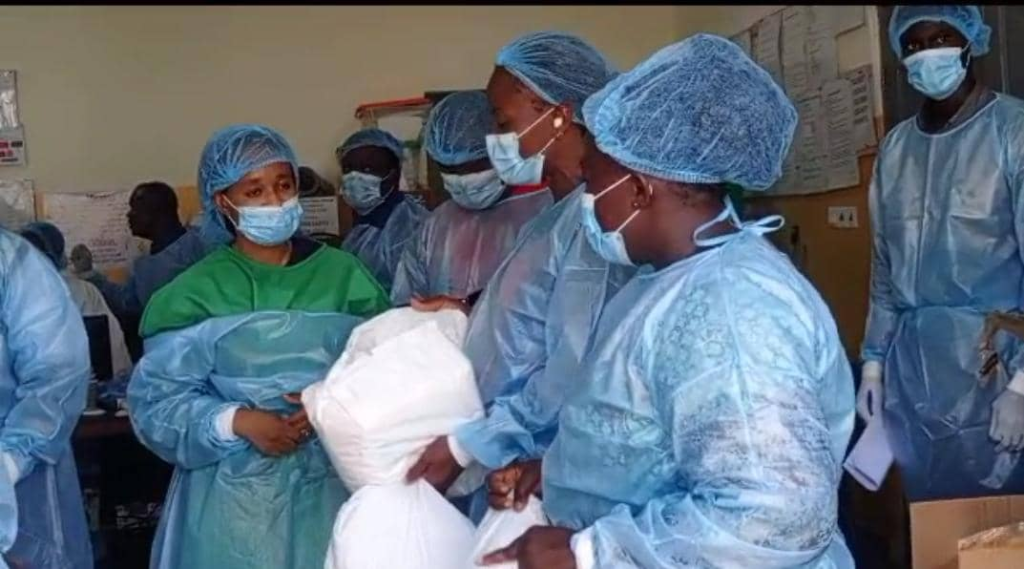
Nearly every year over the past decade, Ghana has recorded endemic cholera outbreaks in certain parts of the country. This year, cases were first reported in some coastal communities of the Ada District in the Greater Accra Region in late October. Just two days ago, additional cases were reported in parts of the Kasoa enclave.
Considering the mode of transmission of this highly infectious disease, Ghana should not still be associated with recurrent cholera outbreaks in the 21st century. Many Ghanaians may not pay much attention to cholera because outbreaks are often concentrated in urban slums, deprived communities, or some rural areas.
Some people even assume that cholera is a disease of individuals who are dirty or fail to maintain personal and environmental hygiene. Such perceptions only deepen the stigma and marginalization of communities that, through no fault of their own, are forced to endure what I consider a shameful public health problem in this century.
Cholera is a shameful public health problem for any nation today because its occurrence often reflects systemic failures, including inadequate access to safe potable water, poor sanitation, and weak sewage infrastructure.
The bacteria that cause cholera can naturally occur in some rivers and coastal waters. Infection may also result from eating raw or undercooked seafood, including shellfish such as shrimp and crabs. However, the most common source of community outbreaks is contamination of drinking water or food with human faeces containing the cholera bacteria.
When faecal matter contaminates water sources used for drinking, cooking, or other household purposes, people unknowingly ingest the bacteria. In simple terms, many cholera infections occur because people consume water or food contaminated with microscopic particles of human faeces carrying the bacteria.
Blame Our Failed Systems, Not the Victims
I do not blame the individuals and families who suffer from cholera. Instead, I believe responsibility should primarily rest with leaders and institutions that fail to ensure communities have access to safe potable water, effective sanitation systems, proper waste management, and decent household toilet facilities.
People in other countries may wonder why Ghana continues to experience recurrent cholera outbreaks despite the disease being largely preventable.
The issue of cholera outbreaks should never be reduced to public education on personal and environmental hygiene alone. While public education is essential, it does not address the root causes of repeated outbreaks. Lasting solutions require sustained investment in safe drinking water, sanitation infrastructure, effective sewage systems, and environmental health services.
Providing reliable sources of safe drinking water and adequate sanitation is fundamentally a responsibility of government. Citizens should not be left to struggle on their own to secure these basic public health necessities.
Therefore, I am not ashamed of the citizens who contract this preventable disease. Rather, I believe every recurring cholera outbreak should prompt serious reflection on whether enough has been done to provide the essential public health infrastructure needed to protect communities from such infections.
It is governments that create or fail to eliminate the conditions that allow cholera to spread. I therefore expect our political leaders to demonstrate genuine commitment by addressing the root causes of these outbreaks. They have been entrusted with the nation's resources and the responsibility to protect public health. Preventing cholera should not be viewed as an impossible task but as a fundamental duty of every responsible government.
Ghana has both the knowledge and the capacity to significantly reduce cholera. What is required is sustained political commitment, adequate investment, and a determination to address the underlying causes rather than merely responding to outbreaks after they occur.
People read this; click on link below to see more