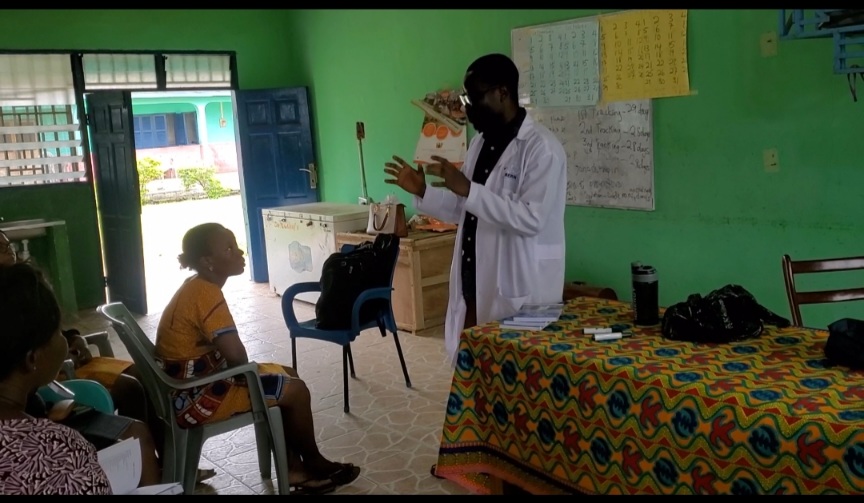
The health team is made up of doctors, nurses, other allied health professionals, and the patient or family.
It is easy to regard only health professionals as those who constitute the healthcare team. However, one of the most important members of the healthcare team is the patient and their family.
The patient’s family often serves as the first point of contact, where vital information is obtained by other members of the health team, such as doctors and nurses, to plan holistic care—especially when the patient, due to their condition, is unable to provide useful information or make decisions regarding their care.
In my view, the patient’s family can even be considered the first member of the health team, before professionals like doctors or nurses. This is because, even before reaching a health facility, some families may have already attempted some form of treatment—particularly in Ghana, where self-medication and the use or misuse of herbal remedies are common.
So, what is the situation in Ghana regarding patients and families as members of the care team? In all honesty, they are largely excluded—either consciously or unconsciously. This exclusion is often reinforced by a lack of awareness on the part of both patients and their families.
Additionally, family members rarely receive adequate information about their loved one’s condition or the treatment options available in many health facilities. They are often limited to paying medical bills and handling related expenses.
Long before organized healthcare systems existed, patients and communities had their own ways of caring for the sick. Therefore, even with today’s structured healthcare systems staffed by highly trained professionals, it is not an exaggeration to say that the entire system becomes ineffective without the patient.
Patients should be adequately informed about their health condition and the treatment options available to meet both their physical and psychological needs.
Unfortunately, many patients who visit health facilities are often timid and find it difficult to ask questions or seek clarification. They tend to remain passive during care—almost like, if I may say, a damaged car taken to a mechanic for repair.
This partly explains why many individuals, especially those living with chronic conditions such as diabetes and hypertension, lack a proper understanding of their illness even after years of treatment.
In conclusion, patients should never be treated as passive objects to be “worked on” or “fixed.” They must be recognized as active members of the healthcare team and supported to play meaningful roles in their own care as much as possible.
People read these; click on links below to see more
self-medication and Steven-Johnson syndrome